
Club descriptions are full of the word forgiving, and many mention MOI. They’re closely related, and understanding them helps you pick clubs that make the game easier instead of harder.
Here’s what they mean in plain terms, where they matter most, and what they can’t do for you.
What MOI means
MOI stands for moment of inertia. In golf, it describes how much a clubhead resists twisting when you hit the ball away from the center of the face.
Think of it like this. When you hit the ball off the toe (the end of the face farthest from you), the head wants to twist open. When you hit it off the heel (the end closest to you), it twists the other way. That twisting costs you ball speed and sends the ball off line.
A high-MOI head twists less. So when you miss the center, which every golfer does, the ball:
- Keeps more of its speed, so you lose less distance.
- Flies straighter, because the face stays closer to square.
That’s what forgiveness means: your mishits turn out closer to your good shots.
How designers raise MOI
MOI goes up when weight sits far from the center of the head. Designers do that by:
- Making the head bigger, so the edges are farther from the middle.
- Moving weight to the perimeter, the outer edges of the head.
- Placing weight low and deep, toward the back of the head, which also helps the ball launch higher.
That’s why forgiving irons have a hollowed-out back (a cavity back) and forgiving drivers often have heavy weights near the back of the sole.
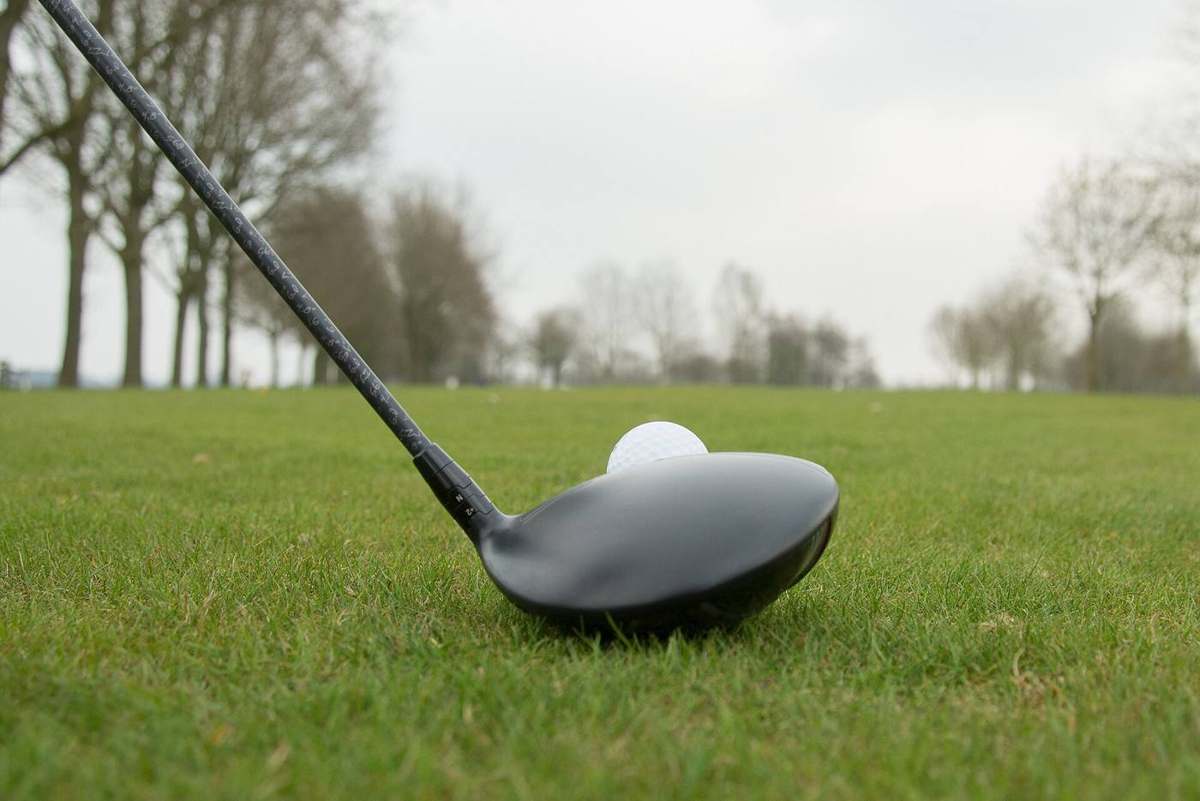
Game-improvement vs players heads
Clubs are usually grouped by how forgiving they are.
| Type | Head size and shape | Forgiveness | Best for |
|---|---|---|---|
| Super game improvement (SGI) | Largest heads, wide soles, most offset | Highest | Beginners, slower swings |
| Game improvement (GI) | Large heads, cavity backs | High | Most everyday golfers |
| Players distance | Compact look, hollow or filled inside | Medium | Improving golfers who want a cleaner look |
| Players / blades | Small, thin heads | Lowest | Consistent ball strikers |
A few terms in that table:
- Offset means the clubface sits slightly behind the shaft. It gives you a split second more to square the face, which helps reduce a slice.
- Wide sole means the bottom of the club is broad, so it slides through the turf instead of digging when you hit a little behind the ball.
- Blades (also called muscle backs) are solid-backed irons with weight concentrated behind the center. They feel great on a perfect strike and punish misses.
For drivers, the most forgiving models often have “Max” in the name. A good example from our catalog is the TaylorMade Qi10 Max, built around a very high-MOI head. Models labeled “LS” (low spin) usually give up some forgiveness to cut spin for faster swings.
For a deeper look at choosing between the two, see our game-improvement vs players clubs guide.
Putters: mallet vs blade
MOI matters on the green too, maybe more than people expect, because a putt hit off the toe can come up well short or wobble off line.
Mallet putters have larger heads that stretch back from the face. That moves weight away from the center, so they tend to have higher MOI. They also often have long sight lines on top that make aiming easier. The TaylorMade Spider Tour and Odyssey White Hot OG #7 are classic mallet shapes.
Blade putters are slimmer and more traditional. They usually have lower MOI, so off-center putts lose a bit more. Many golfers like their look and feel, and they often suit a stroke with a little arc. The Ping Anser 2023 is a well-known blade shape.
| Mallet | Blade | |
|---|---|---|
| Typical MOI | Higher | Lower |
| On off-center putts | More stable | Less stable |
| Aiming help | Often long sight lines | Usually a single line or dot |
| Common fit | Straighter strokes, newer golfers | Arcing strokes, players who like feel |
For most beginners, a mallet is the easier place to start. That said, putting is personal, and the right length (usually 33 to 35 inches) matters at least as much as head shape. Our mallet vs blade putter guide goes deeper.

What forgiveness can do
- Shrink your misses. Off-center hits lose less distance and curve less.
- Make your distances more consistent, which helps with picking the right club.
- Help the ball launch higher, since forgiving heads usually have weight low and back.
- Build confidence. Bigger heads and thicker top lines simply look easier to hit, and that helps some golfers swing more freely.
What forgiveness can’t do
- It won’t fix a big swing flaw. A severe slice comes mostly from how the face and path meet the ball. A forgiving driver can reduce the curve, but it won’t remove it.
- It won’t rescue a badly fitted club. The wrong shaft flex, length or lie angle can hurt more than a forgiving head helps. See our shaft flex guide.
- It won’t make a whiff or a big chunk work. Forgiveness helps with near misses on the face, not shots that miss the ball or hit far behind it.
- It doesn’t replace practice. It narrows the gap between good and bad contact. It doesn’t remove the need for decent contact.
Is there a downside?
For most golfers, not much. Better players sometimes choose less forgiving clubs because they want to shape shots on purpose, like a controlled curve left or right, or because they prefer the look and feel of a smaller head. High-MOI clubs resist that kind of shaping a little. If you’re still working on solid contact, that trade-off isn’t worth it yet.
A note on buying used
Forgiving clubs are often great value used. Better players move on from them, and they hold up well. A forgiving driver or iron set from a few seasons ago is still very forgiving today.
Our free bag builder asks a few quick questions about your game and picks used clubs to match, with a short note on why each one fits.
The short version
- MOI is how much a clubhead resists twisting on off-center hits. Higher MOI means more forgiveness.
- Forgiving heads are bigger, with weight on the edges and low and deep.
- Most golfers are best served by game-improvement clubs, and mallet putters are an easy starting point.
- Forgiveness shrinks misses but won’t fix a swing flaw or a badly fitted club.
- Forgiving clubs from a few years ago are still forgiving, and often cheap used.