
Loft is the angle of the clubface, measured in degrees from straight up and down. More loft sends the ball higher and shorter. Less loft sends it lower and farther. It’s the main thing that decides how far each club goes.
Knowing typical lofts helps you in two ways when buying used: you can tell whether a club fits the hole in your bag, and you can avoid buying two clubs that do the same job.
The loft chart
These are typical lofts. Every brand and model is a little different, so always check the actual number on the club or in the listing.
| Club | Typical loft | What it’s for |
|---|---|---|
| Driver | 9° to 12° | Tee shots on long holes |
| 3-wood | 15° to 16.5° | Long shots off the tee or fairway |
| 5-wood | 18° to 19° | Easier long shots off the ground |
| 7-wood | 21° to 22° | A high, soft-landing long club |
| 3-hybrid | 19° to 20° | Replaces a 3-iron |
| 4-hybrid | 21° to 23° | Replaces a 4-iron |
| 5-hybrid | 24° to 26° | Replaces a 5-iron |
| 4-iron | 19° to 24° | Long approach shots |
| 5-iron | 21° to 27° | Long approach shots |
| 6-iron | 24° to 31° | Mid approach shots |
| 7-iron | 27° to 34° | Mid approach shots |
| 8-iron | 31° to 38° | Shorter approaches |
| 9-iron | 36° to 42° | Shorter approaches |
| Pitching wedge | 41° to 47° | Full shots near the green, longer chips |
| Gap wedge | 48° to 52° | Fills the space between PW and SW |
| Sand wedge | 54° to 56° | Bunkers, chips, short pitches |
| Lob wedge | 58° to 60° | High, short shots that stop fast |
| Putter | 2° to 4° | Rolling the ball on the green |
The iron ranges are wide on purpose. That’s because of strong lofts, explained next.
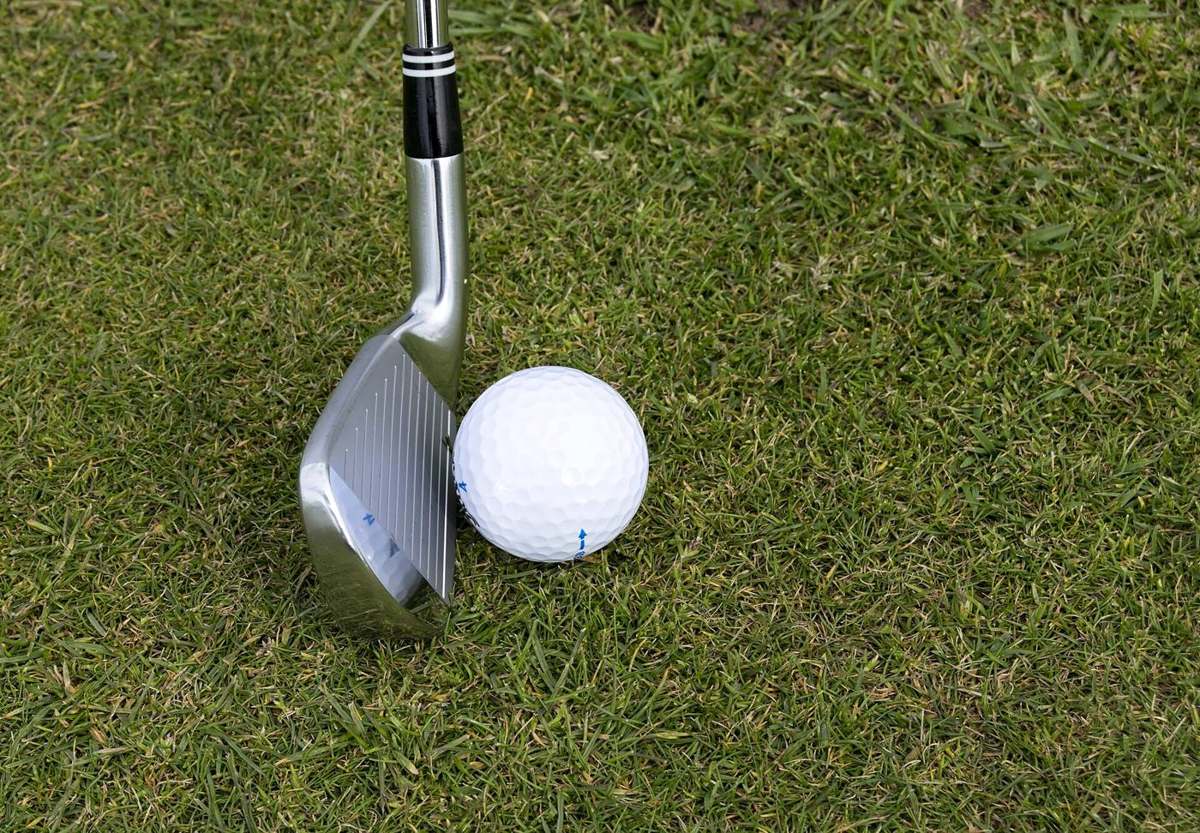
Modern strong lofts vs traditional lofts
A 7-iron isn’t a fixed thing. Over the last few decades, manufacturers have steadily lowered the lofts on their irons, especially in forgiving, distance-focused sets. These are called strong lofts.
| Club | Traditional lofts | Modern players irons | Modern game-improvement irons |
|---|---|---|---|
| 5-iron | about 27° | about 25° to 27° | about 21° to 24° |
| 7-iron | about 35° | about 33° to 34° | about 27° to 30° |
| 9-iron | about 43° | about 41° to 42° | about 36° to 39° |
| Pitching wedge | about 47° to 48° | about 45° to 46° | about 40° to 44° |
Players irons are the smaller, less forgiving clubs made for consistent ball strikers. Game-improvement irons are the bigger, more forgiving clubs most golfers should use. For more on the difference, see our game-improvement vs players clubs guide.
Why the change? A lower loft makes the ball go farther, and modern designs place weight low in the head so the ball still launches high enough. So a modern game-improvement 7-iron often has roughly the loft of an older 5 or 6-iron.
You can see this in two real sets. The Mizuno JPX923 Hot Metal has a pitching wedge around 40°, while the Titleist T100 has one around 46°. Both are labeled “PW.”
Why strong lofts matter when you buy
- Your new 7-iron might go farther than your old one. That’s mostly loft, not magic.
- The gap below your pitching wedge gets bigger. If your PW is 42° and your sand wedge is 56°, that’s a 14° hole. You’ll want a gap wedge, maybe two wedges, to fill it. See how many wedges do you need.
- Long irons get very strong. A 5-iron at 21° or 22° is close to a hybrid’s loft but much harder to hit. That’s one more reason many golfers swap long irons for hybrids (see hybrids vs long irons).
- Compare lofts, not numbers. When mixing used clubs from different brands and years, the loft tells you more than the number on the sole.
Why gapping matters
Gapping means spacing your clubs so each one covers a different distance, with no big jumps and no overlaps.
A good rule of thumb:
- About 4° between irons and wedges. That usually works out to roughly 10 to 15 yards between clubs for most golfers.
- About 3° to 4° between woods and hybrids, though longer clubs often spread out less than you’d expect, especially for slower swings.
- No two clubs with nearly the same loft. A 5-wood at 19° and a 3-hybrid at 19° will likely go about the same distance. You only need one.
Common gaps to watch for
| Spot in the bag | What goes wrong | Easy fix |
|---|---|---|
| PW to sand wedge | Strong-lofted PW leaves a big hole | Add a 48° to 52° gap wedge |
| Longest iron to hybrid | Overlap or a big jump | Match hybrid loft to the iron it replaces |
| Fairway wood to driver | A 3-wood and driver too far apart | A 5-wood or mini driver, depending on swing |
| Wedges | 52° and 54° both in the bag | Space them about 4° to 6° apart |
Lofts on woods and adjustable clubs
Many drivers, fairway woods and hybrids from the last decade or so have an adjustable hosel (the connection between the shaft and head) that changes loft by a degree or two. When buying used, check the listing for the setting it’s in and whether the adjustment wrench is included. The loft printed on the head is usually the standard setting.
For beginners, more loft is usually better on the driver. Around 10.5° to 12° helps get the ball in the air and reduces sidespin.
How loft turns into distance
Loft sets the general distance of a club, but your swing speed decides the actual yards. A faster swing gets more distance from every club and usually needs a little less loft. A slower swing needs more loft to get the ball airborne. Our how far should I hit each club guide covers typical distances by swing speed.
Check your gaps automatically
Mixing used clubs from different brands and years makes gapping tricky. Our free bag builder reads the loft of every club it picks and flags any big gaps or overlaps, so your whole bag works together.
The short version
- Loft is the clubface angle. More loft means higher and shorter.
- Modern game-improvement irons have much stronger lofts than older or players sets, so a 7-iron isn’t always a 7-iron.
- Aim for about 4° between irons and wedges, and avoid two clubs with nearly the same loft.
- Strong-lofted pitching wedges usually need a gap wedge below them.
- When mixing used clubs, compare the actual lofts, not the numbers on the sole.